
From F1 Track to Beach Hub: How The Shelter Company Gave Event Infrastructure a Second Life

Updated: Jul 7
A feature of our partner: The Shelter Company (TSCO)

What do Singapore's Formula 1 race, humanitarian shelters and ocean conservation have in common?
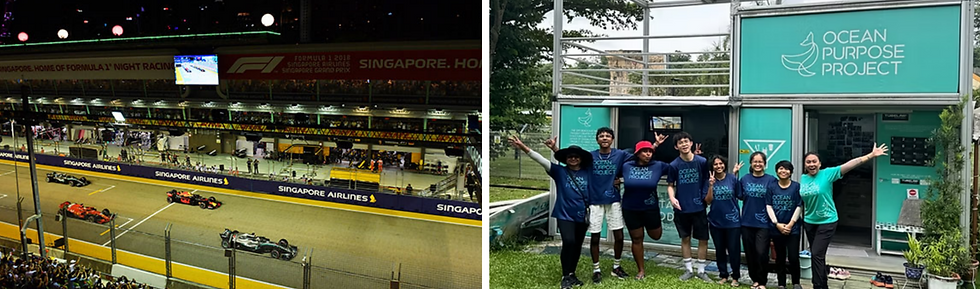
At first glance, very little. Yet they all come together at the Ocean Purpose Project (OPP) Beach Hub in Pasir Ris, where repurposed event infrastructure and an innovative modular system have been given a second life as a permanent base for conservation, education and community action.
The Beach Hub was born out of necessity. Faced with rising construction costs, OPP needed an alternative to its original plans. A recommendation from a local fish farmer led the organisation to The Shelter Company, a Singapore firm specialising in modular structures for events and commercial applications. Through its modular building system and commitment to circular design, The Shelter Company transformed a logistical challenge into the thriving community space OPP relies on today.
Some of the panels that now make up the Beach Hub once served as temporary infrastructure at major events, including Singapore's Formula 1 race. Where they once supported a weekend spectacle, they now form part of a permanent home for environmental work—a place to store equipment, coordinate volunteers, conduct workshops and support conservation efforts along Singapore's coastline.
Our OPP Beach Hub exists because of this partnership between Ocean Purpose Project (OPP) and The Shelter Company, a Singapore firm that builds modular structures for events and commercial use. It started, as useful things often do, with a practical problem.
A Base by the Beach
For its first years, OPP ran its work at Pasir Ris Park without a fixed base. Beach cleanups and water-based projects meant equipment to haul, set up and pack away, and there was nowhere on site to keep any of it, so each session began and ended with logistics. The group's first plan was to solve this with an office built from interlocking shipping containers. Then container prices climbed sharply during the COVID period—roughly doubling, by OPP's account—and that idea became too expensive to pursue.
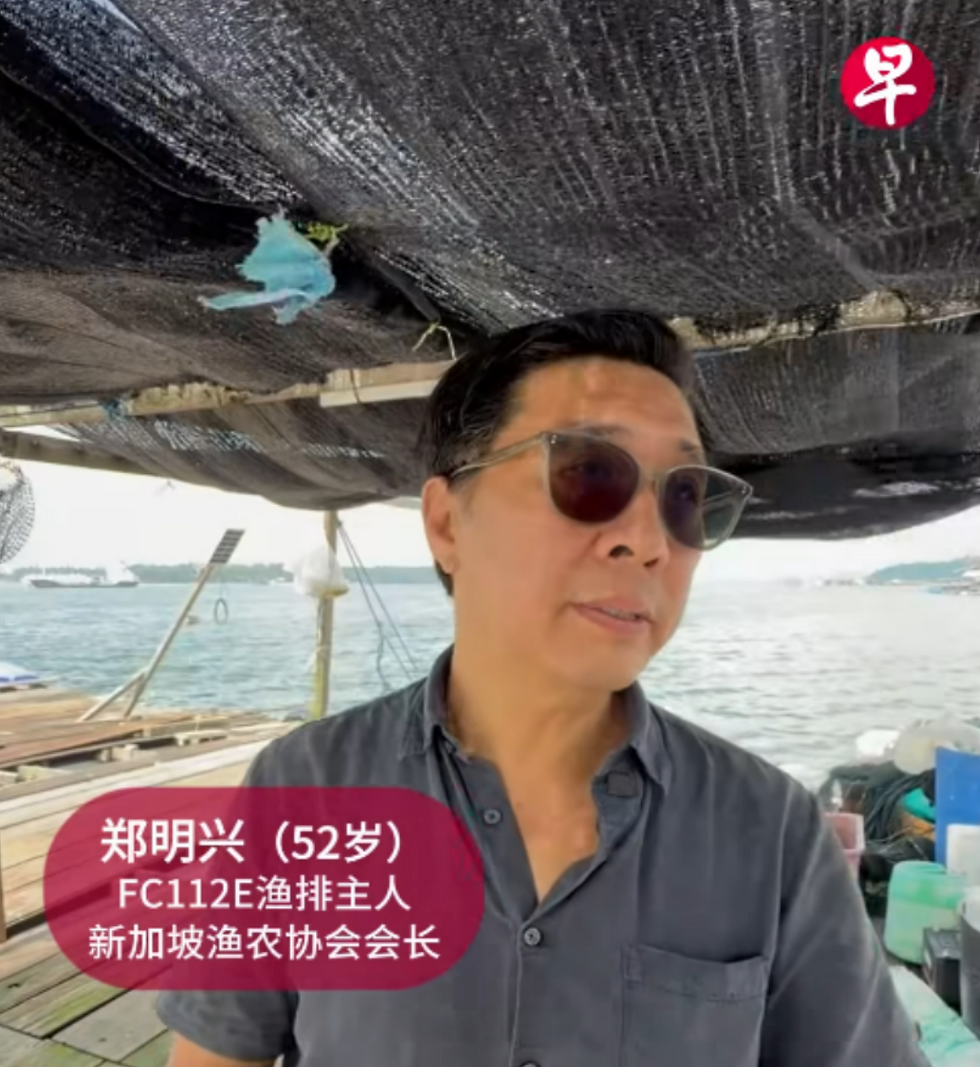
The way forward came through someone OPP already knew. Daniel Tay, who runs the Straits Seafood Company fish farm and has worked with the group, told them there was really only one person for the job. "The only person who can really build your modular office is Sam," he said. The Sam in question was Samuel Vedanaigam, founder of The Shelter Company, and where OPP had been thinking in terms of shipping containers, he offered something lighter and more adaptable.
The Partner: The Shelter Company
Every structure tells a story. While the Ocean Purpose Project (OPP) Beach Hub is now home to OPP staff, volunteers and community programmes, it began with a partnership built on shared values.

Behind the Hub is The Shelter Company, a Singapore-based engineering and construction firm founded in 2001 by Samuel Vedanaigam. Designing, manufacturing and installing temporary, semi-permanent and permanent structures, the company has built a reputation for creating adaptable spaces that serve both commercial needs and community impact.
For Samuel, that philosophy was shaped long before The Shelter Company was established. He began his career in shipbuilding before moving into the events industry, where years of working with steel and aluminium structures taught him how buildings could be assembled quickly, dismantled efficiently and reused across multiple projects. Rather than seeing structures as permanent fixtures, he came to view them as systems that could evolve with changing needs.
This thinking became the foundation of The Shelter Company. Over the years, the company has delivered premium tents, modular buildings, flat-packed structures and bespoke architectural solutions for pop-up stores, exhibitions, hospitality venues, multi-storey event facilities and floating structures. Its projects span Singapore, the Middle East, Japan, New Zealand, the Philippines and the United States, demonstrating how adaptable engineering can be applied across diverse industries and environments.
Some of its notable projects in Singapore include the Presidential Library pop-up at Plaza Singapura, which recreated the country's iconic black-and-white colonial architecture using the Tubelar® Modular System, as well as the custom multi-storey hospitality, operations and media facilities built for Asia's first SailGP Championship.
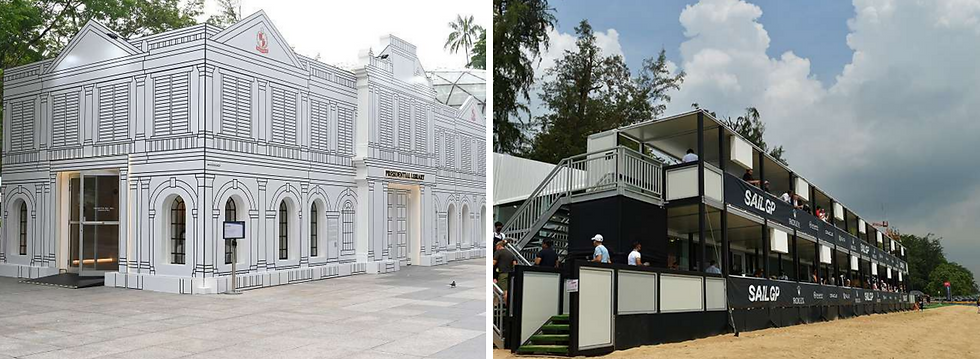
(Left) The Presidential Library pop-up at Plaza Singapura
(Right) Custom multi-storey Tubelar® Modular System built for SailGP Championship
Yet Samuel believed the same engineering principles could achieve more than supporting events and commercial spaces. He envisioned a building system that could also respond to humanitarian and community needs by creating structures that were easier to transport, faster to assemble and flexible enough to adapt to different purposes.
Following the 2013 Bohol earthquake in the Philippines, he donated one of his modular structures for use as a temporary hospital, reinforcing his belief that engineering should not only solve construction challenges but also improve people's lives. This vision ultimately led to the development of the Tubelar® Modular System and later Doonya, a humanitarian shelter concept that would eventually inspire the Ocean Purpose Project Beach Hub.
Today, that same philosophy underpins the Beach Hub. More than simply constructing a building, The Shelter Company brought decades of engineering experience together with a commitment to adaptability, sustainability and social purpose—values that closely align with Ocean Purpose Project's mission.
The Technology
From Doonya to the Beach Hub
The Ocean Purpose Project (OPP) Beach Hub is built using The Shelter Company's patented Tubelar® Modular System, an innovative modular construction technology originally developed for Doonya - a humanitarian shelter named after the Indian word for "world."
Conceived as a flexible alternative to temporary tents, Doonya was designed to provide dignified spaces for people displaced by conflict or natural disasters. Its modular design allows the same building system to be configured as homes, schools, clinics, community centres and small businesses, demonstrating how a single construction platform can serve diverse needs.
Originally showcased at the Venice Biennale, the Doonya concept laid the foundation for the OPP Beach Hub. While its purpose has shifted from humanitarian relief to environmental conservation, the underlying design philosophy remains the same: combining flat-pack portability and sustainability to create spaces that empower communities. For Ocean Purpose Project, this meant establishing a functional coastal base for equipment storage, volunteer coordination and environmental education without relying on extensive conventional construction.

Designed for Flexibility
At the heart of the Beach Hub is The Shelter Company's patented Tubelar® Modular System, developed around Design for Manufacturing and Assembly (DfMA) principles. Featuring lightweight aluminium components—each weighing no more than 25 kg—and a flat-packed modular design, the system can be efficiently transported, assembled, dismantled and reconfigured for different sites and applications. Despite its lightweight construction, the structure is engineered to be earthquake-resistant.
One of the system's defining strengths is its simplicity. A standard Doonya structure can be assembled by four people in approximately eight hours using only a single Allen key, without requiring specialised construction skills. Its pod-based modular design also enables buildings to be expanded horizontally, configured into different layouts and constructed up to two storeys high, making the system suitable for a wide range of humanitarian, commercial and community applications.

Giving Materials a Second Life

Beyond its modular design, the Beach Hub also demonstrates the principles of circular construction.
Rather than using entirely new materials, The Shelter Company repurposed aluminium structural elements and wall panels originally used for Singapore's Formula 1 race infrastructure. Although some panels had sustained minor damage during the event, they were carefully repaired and restored before being incorporated into the Beach Hub.
This approach extends the useful life of materials that would otherwise have been discarded, transforming infrastructure designed for a single weekend into a long-term community asset. Individual Tubelar® components can also be repaired, replaced or reused without dismantling the entire structure, reducing construction waste while extending the building's lifespan.
Designed for a service life of up to 20 years, depending on maintenance and environmental conditions, the Tubelar® Modular System demonstrates how engineering innovation and circular design can work together to create durable, adaptable infrastructure. Originally created to provide dignified shelter in humanitarian settings, the same technology now supports Ocean Purpose Project's mission by providing a resilient base for ocean conservation, research and community engagement.
Built by a Community
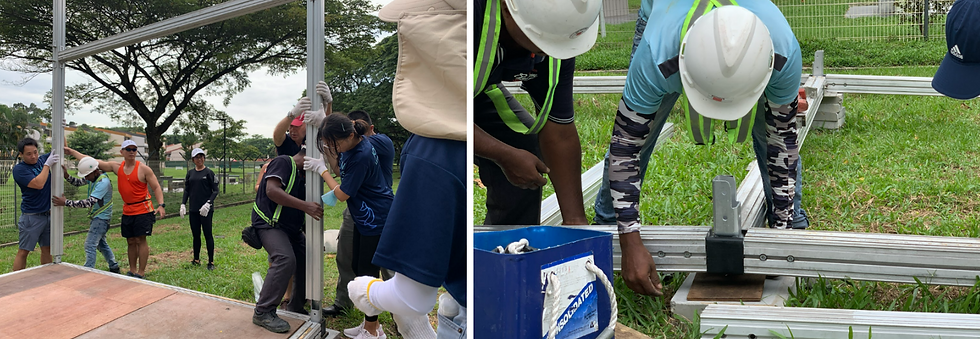
Construction of the Beach Hub began on 2 May 2022, when the main modular structure was assembled at Pasir Ris Park.

The components arrived in flat-packed form and were connected piece by piece on site. Photographs and time-lapse footage from the first day show the aluminium framework rising against the surrounding trees as the main structural elements were secured.
Watch the OPP Beach Hub take shape from the ground up in this time-lapse.
By 3 May 2022, the structure had taken shape and work had progressed to additional components, including the solar installation.
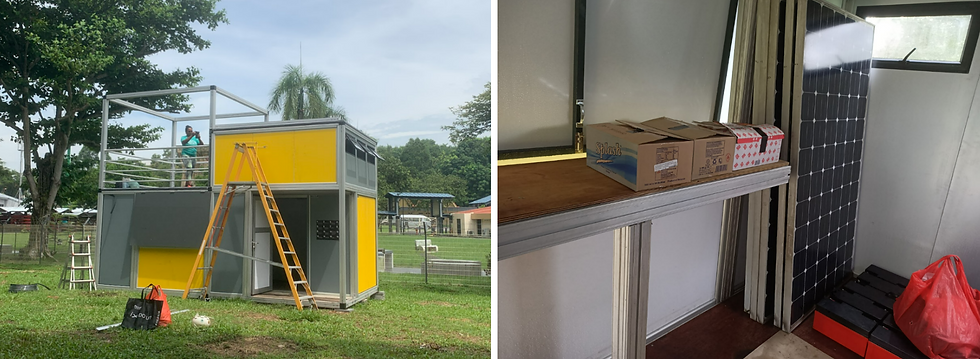
The two-day sequence shows one of the practical advantages of modular construction. The main framework could be assembled quickly, although the full completion of the Hub also involved fitting the panels, flooring, roofing, solar equipment and interior elements.

The Shelter Company’s team worked alongside the OPP interns and Ms Mathilda’s German Dragon Boat friends, assembling and building the Beach Hub from scratch, from assembling the aluminium structure to installing our first-generation solar panels, bringing the space to life.
The contribution went beyond supplying a construction system. The Shelter Company brought the technical knowledge, labour and practical experience needed to adapt the components to the Pasir Ris site and turn them into a space suitable for regular use.
A Hub with Purpose
With the Beach Hub in place, OPP gained the consistent operational base it had previously lacked. Equipment could be stored on site, volunteers could gather in one location, and programmes could be coordinated from the same place in which many of them were delivered.
Today, the Hub supports environmental education, sustainability workshops, volunteer mobilisation, marine conservation activities and community engagement. OPP records approximately 2,000 visitors each year, reflecting the number of people who pass through the space and participate in the work conducted there.


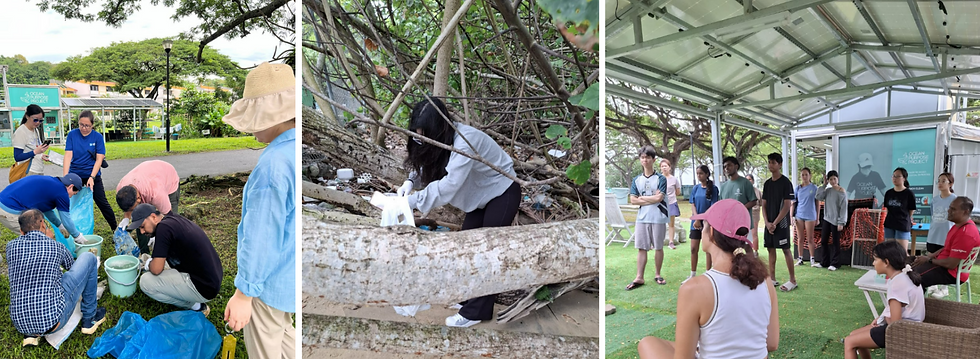
The Hub also serves as an active platform for:
Environmental education and sustainability workshops
Volunteer mobilisation and community engagement
Marine conservation activities
Innovation and collaboration in the blue economy space
Every programme hosted at the Hub extends the impact of The Shelter Company’s contribution beyond construction.
What began as event infrastructure has evolved into a space that empowers people to learn, connect, and take action for the environment.
Through this partnership, The Shelter Company has not only supported the creation of a physical space—they have helped create an ongoing model for how circular design, modular construction, and cross-sector collaboration can drive long-term environmental impact.
People Behind the Project (Building of OPP)
While Samuel Vedanaigam and The Shelter Company (TSCO) were responsible for engineering and building the OPP Beach Hub, the Doonya concept itself was developed through a collaboration between three organisations.
Rinkoo Bhowmik, founder of The CHA Project, conceived and developed the project. Jackie Lai, founder of JIA Studios, led its design, while Samuel Vedanaigam, through POD Structures, engineered and built the system using Tubelar® technology.
Together, the three founders combined architecture, humanitarian design and modular engineering to create an adaptable modular concept for communities affected by conflict and natural disasters.
As Jackie Lai described it, "Every element in Doonya is designed to enrich and delight the user."

A Partnership with Purpose
There is a clear thread running through the story of the Beach Hub. Materials originally created for temporary events now support programmes at Pasir Ris Park, while a modular system designed for adaptability has been transformed into a space that continues to evolve alongside Ocean Purpose Project's changing operational and community needs.
For Ocean Purpose Project, the partnership addressed a genuine challenge. The organisation needed a dedicated base for operations, equipment storage and community engagement, but its original plans had become financially unviable. The Shelter Company responded by contributing not only its modular construction technology, but also repurposed materials, engineering expertise and hands-on support throughout the build.
The partnership also demonstrates that supporting environmental organisations extends beyond financial contributions. Companies can create meaningful impact by sharing materials, specialised skills, design expertise, labour and innovative technologies that address real-world challenges.
Ocean Purpose Project extends its sincere appreciation to The Shelter Company and Samuel Vedanaigam for their generosity, expertise and commitment in bringing the Beach Hub to life.
As OPP continues to grow, it welcomes partnerships with organisations that can contribute practical ideas, technical capabilities and shared purpose in tackling environmental challenges. The Beach Hub stands as a tangible example of what such collaborations can achieve: existing materials given a second life, engineering innovation applied with purpose and a community space that continues to create lasting environmental impact.
The story of the Beach Hub is far from over. This July, The Shelter Company will once again support our OPP Beach Hub for the next phase of renovations, including replacement of flooring, flip-up panels and more. These enhancements will create an even more welcoming and functional space for conservation, education and community engagement.
Stay tuned as we embark on this exciting new chapter, and we look forward to welcoming you to our newly renovated OPP Beach Hub soon!


This story shows how event infrastructure from F1 racing found new life as a conservation hub, proving the power of circular design. After exploring such innovative sustainability projects, I often reset with short interactive breaks—Fnaf offers that same mix of intensity and focus, balancing environmental impact with playful concentration that keeps energy flowing.
I enjoy trying to stay unpredictable in Basketball Bros by changing my timing. Sometimes a slower move catches the other player completely off guard.